


Curious to start an online business and looking forward to Affiliate Marketing India? Then let me tell you that you are opting for one of the best online business models.
Frankly speaking, some extra income hurts no one!
Having a second source of income can give you that branded watch you wanted or that spacious car that always has been in your bucket list.
Some extra cash can definitely make your life more comfortable.
One of the best ways to get an inflow of money without much hard work is affiliate marketing.
There is tremendous income potential in Affiliate Marketing in India where you can make as much as 80% of affiliate commission.
In this article, we are going to discuss how to start affiliate marketing in India, so that you can start earning from the comfort of your home.
The business of affiliate marketing is probably one of the most beautiful online. People are engaging here every day to make some extra income.
Affiliate Marketing refers to the process of earning a commission by way of promoting other companies products.
Once you find a product that you like, you need to help others and gather some profit for every sale that you make.
There are usually two sides to affiliate marketing- the affiliate marketer and the product seller and creator.
Affiliate marketing in India has gained new ground. There are several perks to marketing that make it essential to carry on the everyday operations of the company.
Let’s have a brief introduction to affiliate marketing first.
What is Affiliate Marketing?
Affiliate marketing is a type of performance-based digital marketing in which a business rewards one or more affiliates for each visitor or customer brought by the affiliate’s own marketing efforts.
Affiliate marketing is an online sales tactic that lets a product owner increase sales by allowing others targeting the same audience – “affiliates” – to earn a commission by recommending the product to others.
At the same time, it makes it possible for affiliates to earn money on product sales without creating products of their own.
Some of the best affiliate marketing platforms in India are:
- Amazon Affiliate Program
- Flipkart Affiliate Program
- Snapdeal Affiliate Program
- VCommission
- Awin
- ShareASale
- Pepperjam
Affiliate marketing has grown quickly since its inception.
The e-commerce website, viewed as a marketing toy in the early days of the Internet, became an integrated part of the overall business plan and in some cases grew to a bigger business than the existing offline business.
Different digital and social media marketing platforms are used to promote affiliate products.
How does Affiliate Marketing Work?
Affiliate marketing works by spreading the cost of customer acquisition across multiple parties. The affiliate earns a commission for each customer brought to the merchant by their own marketing efforts.
Affiliates can also earn money from second-tier commissions, which are commissions earned by referring other affiliates to the affiliate marketing program. Affiliates can earn up to 10% in second-tier commissions.
The concept of affiliate marketing on the Internet was conceived of, put into practice, and patented by William J. Tobin, the founder of PC Flowers & Gifts. Launched on the Prodigy Network in 1989, PC Flowers & Gifts remained on the service until 1996.
By 1993, PC Flowers & Gifts generated sales in excess of $6 million per year on the Prodigy service. In 1998, PC Flowers and Gifts developed the business model of paying a commission on sales to the Prodigy Network.
Let’s have a brief introduction to affiliate marketing first.
Affiliate Marketing in India: Brief Introduction
In the simplest terms, affiliate marketing is the process of recommending products to people and getting some commission as a result of those recommendations.
This process of promoting someone else’s products can be done in several ways.
(i) Social Networking
(ii) SMS and Email marketing
(iii) Blogging
Out of the three methods, blogging has been seen to be the most successful way of doing affiliate marketing.
Download Detailed Brochure and Get Complimentary access to Live Online Demo Class with Industry Expert.
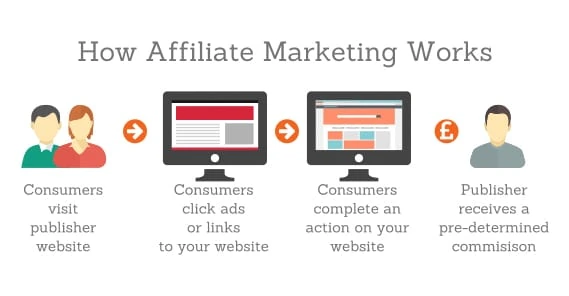
Affiliate marketing involves the following steps:
(a) Finding a product to promote
(b) Signing up for an affiliate program
(c) Getting your unique affiliate link
(d) Promotion of the affiliate products and links
(e) Scoring a commission when someone buys a product through your link
Top Websites for Affiliate Marketing in India

Several websites are offering high conversion rates within India. But some of them top the list and you need to pay heed to them if you want to make good money by using an Affiliate marketing network in India. Given below is a list of the top 15 affiliate marketing websites in India-
1. Flipkart Affiliate Marketing
3. vCommission
4. eBay
5. HostGator Affiliate
6. Admitad
7. Nearbuy Affiliate
8. GoDaddy Affiliate
9. MakeMyTrip Affiliate
10. DGM India
11. BIGROCK
12. Optimise
13. Payoom
14. Komli
15. Rakuten
Starting Affiliate Marketing Business
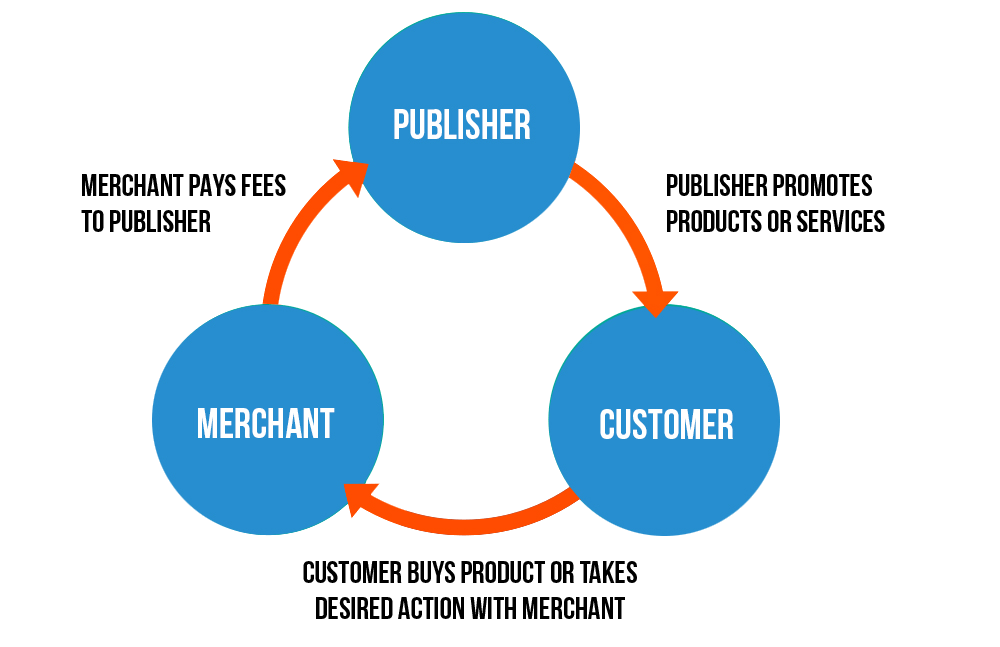
This is turning into some of the most successful businesses in India. There are primarily two ways of doing this business- one by starting a blog and the other could be anything else.
Let’s assume you start a blog. It is impossible to earn money with the blog without having some affiliate website products to promote on your page. You have to plug yourself into PPC or CPC marketing campaign to do this.
In affiliate marketing, if you sell your product through an affiliate link, then you get a maximum of 80% of the product’s MRP as your commission.
Why Choose Affiliate Marketing in India?
- In case you want to break into the retail industry or any particular niche, there is no better way to start than affiliate associations. These websites will already have an established audience that can see the use of your product.
- Your brand will be given a much stronger virtual presence through affiliate marketing. You will get a broader bandwidth through other websites than you could have achieved on your own. Your partners shall act as an extension of your sales team or marketing strategies.
- Affiliate marketing is highly cost-effective. You only pay commissions when your conversion occurs. Hence you do not throw away any money on ad dollars or placements that have no market value.
While talking about the importance of Affiliate Marketing, Bo Bennet says-
Affiliate marketing has made businesses millions and ordinary people millionaires.
So, by opting for Affiliate Marketing, you will find one of the most efficient and effective marketing techniques that can adeptly optimize your ROI. Some of the other reasons why Affiliate Marketing in India is the right business option for you-
- It lets you handpick your partners
- Affiliate marketing lets you enjoy targeted traffic
- It comprises low risk, plus you just pay for performance and sales
- It only requires limited start-up costs
- An increase in SEO and the use of detailed statistics and data help you in optimizing your affiliate marketing campaigns
- Time-saving on marketing and it creates valuable partnerships
- It is a different income stream for your business
- Affiliate marketing plays a key role in scaling your business
- It lets you access foreign markets and you will be in control of your incentives
- The working of Affiliate marketing seems like it is being channelized through semi-auto pilot mode
- With Affiliate Marketing in India, you will be able to increase the return on investments in a consistent manner
Types of Products best for Promoting Affiliate Marketing Network in India?
In affiliate marketing, you can sell any product you want. It can be a tangible product like toys or a non-tangible product like spa services.
Based on the type of product you choose the affiliate commission may vary. Broadly speaking, there are two types of affiliate marketing. One is for selling products and the other deals with selling services.
As compared to services, affiliate marketing for a product will fetch you less commission. This is due to the cost involved in the manufacturing, storage, packaging, and delivery of the product. The commission range for products may range between 4-15%.
On the other hand, services like hosting, software, or email tools that are service-based will earn you higher commissions. Besides higher commission %, they are also recurring in nature as long as the customer keeps on availing the service.
You can go ahead and promote any type of product that is physical or non-physical- good, services, computer peripherals software.
Every product comes with a specific affiliate commission that has been set by the merchant. When choosing a product ask yourself the following questions-
(i) Is there good use of this product?
(ii) Will my customers be able to make sense of it?
(iii) Is the buying process easy and convenient?
(iv) Is there a good affiliate commission associated with the product?
How to Start Affiliate Marketing in India
Easy Steps to Start Affiliate Marketing in India
You will find several affiliate programs on the net. However, in India, Flipkart and Amazon are the two most popular affiliate program choices.
We are going to tell you how to get started with Affiliate marketing in India in the following section.
Step 1: Find a Product Category to Promote
Finding a product category that interests you is synonymous with selecting a niche. It is the most crucial step in getting started with affiliate marketing. It is crucial because you will be molding your writing or content according to a specific audience.
While selecting a product category, it is best to go with the one that interests you and also that you know about. Remember, you have to write on it continuously to gain more audience. So choose wisely.
Another factor that you must pay heed to is competition. Going with a product category and topic that is too competitive will not yield results quickly. Therefore, you have to do a little bit of research on the competition.
Browse through the product category section of both Amazon and Flipkart to make up your mind. Visit the best-selling product lists of these e-commerce platforms to see what is in demand.
Don’t forget to also consider the commission % on each product category.
Step 2: Build a Website
As we mentioned before, there are several methods by which you can do affiliate marketing in India. However, having a website is the best route.
Creating a website is not at all difficult. You just have to buy a domain and a good hosting plan. Integrate the two and start designing your website. The whole process will take hardly 20 minutes.
A CMS like WordPress makes it easy to create a website by yourself without the need for any coding knowledge.
You can take the help of PPC campaigns and YouTube videos to drive traffic to your website.
Step 3: Sign up for an Affiliate Program
After getting your website up and running it is now time to choose your affiliate program.
Some popular affiliate marketing networks in India are:
1. Amazon
Amazon launched its affiliate program in 2013. Since then, it has been one of the leading choices for affiliate marketing companies in India. Amazon’s affiliate program offers commissions of up to 12%.
2. Flipkart
Flipkart is another one of the best affiliate marketing companies in India. It doesn’t require any fee to join and offers a competitive commission percentage on its wide range of products. They pay on time.
3. vCommission
vCommission possesses a network of 17500 affiliates. These numbers are still growing. vCommission offers a good profit % on sales. Bloggers have the option to earn money through their CPC, CPS, CPA, and CPI offers.
Furthermore, they offer app installation and specialized branding that appeals to bloggers.
4. eBay
For those who want to earn money fast and easily, eBay should be your choice for the affiliate program. You can join the eBay affiliate marketing network in India free of cost. They also offer attractive commission rates.
5. Share a Sale
If you want to earn well by doing affiliate marketing in India, Share a Sale can also be a good option. Any business owner or blogger can join it. They just have to complete a short registration process. After that, you just have to select a merchant product suitable for your blog.
Step 4: Select the Product you Intend to Promote
You had first selected your product category. Now it’s time to choose items under that category. It’s good if you have already decided what you want to promote. If you are still confused, you can just hop on to the best performing list on Amazon.
Don’t just go by the best-selling list; also include the good reviews or ratings as your sorting criteria. Once you have zeroed in on an item just begin promoting that item on your website by writing compelling content.
It is a good idea to go with the products that are already in demand and are selling well.
Step 5: Create Content About the Product
When it comes to promoting, writing any type of content won’t do the work. You have to be smart about your writing. The aim here is not just to give valuable information to your audience (which you must do, it’s important). You should also mold your writing to persuade them to buy.
We have made a list of the type of content that performs best for affiliate marketing.
(i) The ‘How to Articles: ‘How to’ articles teach people something and they also happen to be the best-performing ones for sales. You can write how-to articles as well as tutorials. They add much value to your readers and generate natural sales. For example, “How to decorate your home?” is one question you can combine with relevant product links.
(ii) Comparison Blogs: Comparison blogs compares the features, pros, and cons of two products. You can write articles that compare two or more products. Such items attract an audience and increase traffic.
(iii) Product Review Articles: The product review discusses the features as well as the experience of using the product. It is advisable to write these after you have personally tried the product. You should write product reviews. It is best to go for the articles that you have already used or often come in touch with.
(iv) Discount Articles: Here you throw light on the latest sales, discounts %, and coupons that give people value for their money.
(v) Product Listicles: This is an accumulation of information on different products of one category to help the users make a choice.
Best affiliate programs in India 2024
1. Amazon Associates:
Amazon Associates is one of the first online affiliate marketing programs and is still one of the best. The program enables you to earn commissions on products sold by Amazon, as well as on Amazon Prime subscriptions.
2. Flipkart Affiliate :
The Flipkart Affiliate allows you to earn commissions on products sold by Flipkart, one of the leading e-commerce websites in India. The program offers a wide range of products, including electronics, books, clothing, and more.
3. Reseller Club Affiliate:
The Reseller Club Affiliate Program enables you to earn commissions on products and services sold by Reseller Club, a leading provider of web hosting and other web-related services. The program offers a wide range of products, including web hosting, domain names, SSL certificates, and more.
4. Awin Affiliate Network:
Awin is an affiliate that allows you to earn commissions on product sales from a wide range of companies, including many major brands. The network offers a wide range of products, including fashion, electronics, travel, and more.
5. ShareASale Affiliate Network:
Opt for the ShareASale Affiliate and earn money by promoting the products of over 3,900 companies, including major brands such as Nike, Canon, and WordPress. The network offers a wide range of products, including clothing, electronics, books, and more.
6. ClickBank Affiliate Network:
The Internet is awash with a variety of opportunities for you to promote ClickBank products, such as e-books, software, and membership sites. The network offers a diverse selection of goods in a number of sectors.
7. CJ Affiliate Network:
It is an affiliate that enables you to promote the products of over 3,000 advertisers, including many major brands. The network offers a wide range of products, including clothing, electronics, books, and more.
8. Hostgator Affiliate Program:
It enables you to promote the products of one of the leading web hosting companies. The program offers a wide range of products, including web hosting, domain names, SSL certificates, and more.
9. Bluehost Affiliate Program:
The Bluehost Affiliate Program allows you to market one of the world’s top web hosting firms’ goods. The program provides a wide range of services, including web hosting, domain names, and SSL certificates. Godaddy affiliate program is also one of the best hosting affiliate programs.
10. Cuelinks Affiliate Network:
Cuelinks is an affiliate network that allows you to monetize your website or blog by converting outbound links into affiliate links. The network offers a wide range of products, including books, electronics, travel, and more.
These are some of the best programs for affiliate in India that you can sign up for to promote affiliate products and start earning commissions and money online.
Affiliate marketing is a great way to earn passive income, and it offers a wide reach to potential customers. So, if you are looking to increase sales for your business, then affiliate marketing is definitely worth considering.
Best niche for affiliate marketing India
Some of the best niches for starting an affiliate marketing India are-
- Health and Fitness
- Fashion
- Technology
- Travel
- Business and Finance
- Home and Garden
- Food and drink
- Sports and outdoors
- Gaming
- Entertainment
Best amazon affiliate websites in India
Some of the best websites for Amazon affiliate marketing in India are –
- Affiliate Mantra
- Affiliate Junction
- Amazon India Affiliate
- Affiliate World
- Affiliate Window
- Amazon Affiliates
- ClickBank India
- Flipkart Affiliate
- Paytm Affiliate
- Shopify
- Snapdeal Affiliate, etc
Some of these are also known as the best pay-per-click affiliate programs in India such as Affiliate Junction, Amazon Affiliates, ClickBank India, Flipkart Affiliate, Paytm Affiliate, etc.
Bank Affiliate Programs India
- SBI Affiliate Program
- ICICI Affiliate Program
- HDFC Affiliate Program
- Axis Bank Affiliate Programme
- Kotak Mahindra Bank Affiliates Programme
- Yes Bank Affiliate Programme, etc
Best credit card affiliate programs in India
- American Express Affiliates Programme
- Citibank Affiliates Programme
- HDFC Bank Affiliates Programme
- HSBC Affiliate Programme
- ICICI Bank Affiliates Programme
- SBI Card Affiliate Programme, etc
Best insurance affiliate programs in India
- Bajaj Allianz Affiliate Program
- HDFC ERGO Affiliate Program
- Max Life Insurance Affiliate Program
- PolicyBazaar Affiliate Program
- SBI General Insurance Affiliate Programme, etc
Best hotel affiliate programs in India
- Goibibo Affiliate Program
- MakeMyTrip Affiliate Program
- OYO Affiliate Programme
- Yatra Affiliate Programme, etc
Best flight affiliate programs in India
- Cleartrip Affiliates Program
- MakeMyTrip Affiliate Program
- Musafir Affiliates Programme
- Yatra Affiliate Programme, etc
Best e-commerce affiliate programs in India
- Amazon Affiliates
- Flipkart Affiliate
- Paytm Affiliate
- Shopify
- Snapdeal Affiliate, etc
Benefits of Affiliate Marketing in India
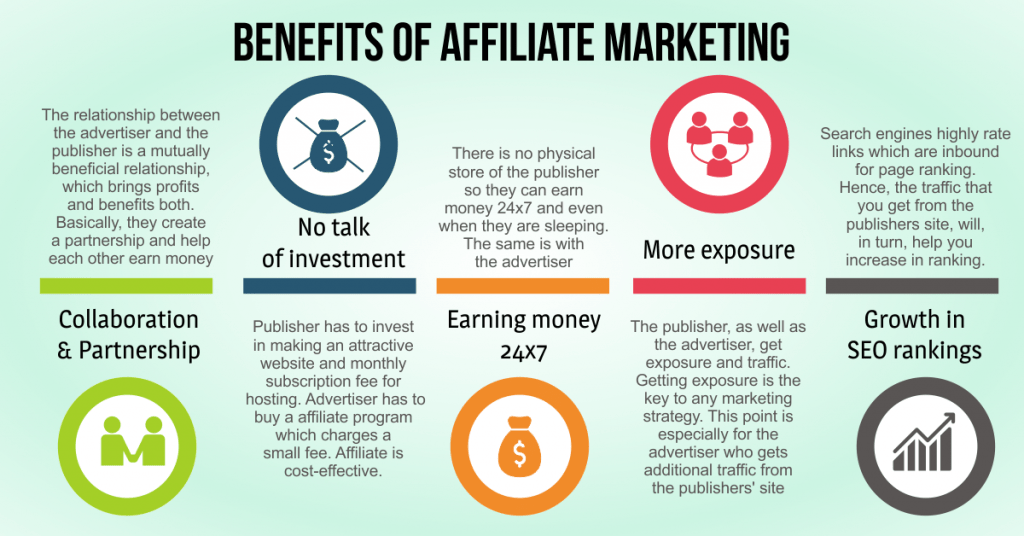
There are tons of benefits of affiliate marketing. Some of them have been highlighted below:
(i) You are earning money by selling someone else’s product. This takes away the stress of creating your own product and selling it.
(ii) You are concerned only with the sales part of the business. You do not have to bother about storage, packaging, and delivery.
(iii) This requires practically no monetary investment from your side, but you still make money.
(iv) Affiliate commission can go up to 70-80% for some products which present huge earning potential.
(v) If you manage to sell a service then you may be eligible to earn a commission for a long period of time which ends only when the customer withdraws their membership.
(vi) This is one of the best ways of earning passively. After some initial phase of hard work, you can earn money even when you are sleeping.
(vii) A successful affiliate marketing business can make you financially independent. It can give you the freedom of quitting your 9-5 job.
(viii) Affiliate marketing only requires some time and effort in promoting the products by blog writing, text link ads, banner ads, and others.
Final Thoughts
Affiliate marketing in India is a viable option as a second income source.
If done successfully, it can also become the primary source of income giving the affiliate marketer freedom from his daily grind. One can earn more money from it than any other online-based business or work.
Affiliate marketing is a beautiful way of making more income. This is especially true when compared to other online jobs from home. You do not sell your product but get money for the promotion of someone else’s items.
There is no need for you to set up stores or maintain stock. All the responsibilities of packing, shipping, and delivering are not your problem but the merchants.
Yes, initially it will be tough to make sales. However, it just takes some time to get started. A little bit of hard work and patience may lead you to the path of financial freedom.
Enrolling in a Digital Marketing Course will help you learn about the Affiliate Marketing Companies in India and how to start Affiliate Marketing in India like a pro.
How important do you consider the scope of Affiliate Marketing in India? Share your thoughts with us in the comments below.
FAQs
Question: What is Affiliate marketing?
Answer: Affiliate marketing is a process of earning a commission by promoting other people’s or companies products.
Question: What are the benefits of affiliate marketing?
Answer: Affiliate marketing has various benefits that include- it’s a great way to earn passive income, it offers a wide reach to potential customers, and it’s a cost-effective marketing strategy.
Question: What are some of the best programs for affiliate marketing in India?
Answer: Affiliate Junction, Amazon Affiliates, ClickBank India, Flipkart Affiliate, Paytm Affiliate, etc.
Question: What is the best niche for affiliate marketing in India?
Answer: The best niches for affiliate marketing in India include health and fitness, fashion, technology, travel, business and finance, home and garden, food and drink, sports and outdoors, gaming, and entertainment.
Question: What are some of the best amazon affiliate sites in India?
Answer: Affiliate Mantra, Affiliate Junction, Affiliate World, Affiliate Window, Amazon Affiliates, ClickBank India, Flipkart Affiliate, Paytm Affiliate, Shopify Affiliates, Snapdeal Affiliate, etc. are some of the best amazon affiliate sites in India.


















Hi Ankit,
Of all the posts I have read on Affiliate Marketing till date, this is the best.
Hi
firstly, your site is just awesome
and Its very helpful content about cpa affilate marketing I really appreciate.
Useful Information…..Thank you
valuable post
very superb explanation. don’t anyone could not explain any better. knowledge able article.
Very Informative Article. Thanks For Sharing.
Nice blog for the beginners to know about various affiliate marketing platforms.
thankyou for giving such a beautiful knowladge