Are you interested in optimizing your brand online? Searching for methods to creating leads by means of Ads, and increment your sales? PPC training in Delhi can enable you to scale up your revenues and move ahead of your competition.
PPC or Pay per Click Advertising is a standout amongst the best advertising methodologies accessible for present day online retailers. At the point when actualized successfully, a well-run PPC campaign can definitely build the traffic movement that optimizes conversions and prompt a great return on your investments.
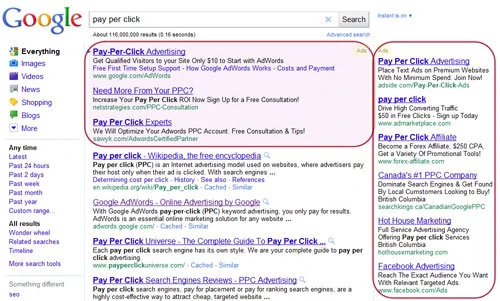
In any case, here at Digital Vidya, we see exactly how startling PPC campaigns can be, especially in the event that you have never delved into the process before. That is the reason we give you a comprehensive PPC Training in Delhi, which covers every one of the details of making and dealing with a paid advertising campaigns on the web. This article will let you know everything about our PPC Training Course and Search Engine Marketing Course, but before going into the details, let’s firstly understand What is PPC, and what are the advantages of PPC training–
What is PPC?
- Pay per click (PPC) advertising is a digital marketing model utilized on sites, in which advertisers pay their host just when their advertisement is clicked. Advertisers bid on keyword phrases important to their target marketing via search engines.
- Although there are numerous PPC service providers exist, Google AdWords, Microsoft adCenter, and Yahoo! Search Marketing are the three biggest system administrators, and every one of the three works under bid based advertising framework.
- Cost per click (CPC) changes relying upon the search engines and the level of competition for a specific keyword.
What are the Advantages of PPC?
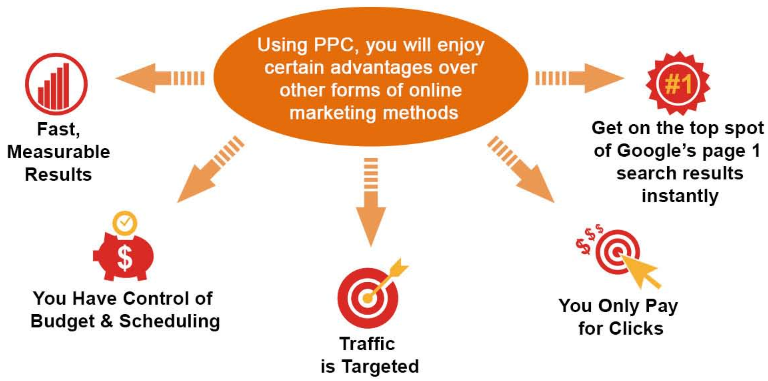
- The real favorable position of PPC is the speed and dynamic nature of its advertising technique. Not at all like SEO, which may take a long time to give any perceptible advantages to your business- PPC can quickly work to draw in and convert substantial quantities of individuals to your site.
- Pay-per-click advertising is novel, as you are just required to pay for it when your audiences effectively consume it. Once you have picked your optimal keywords, your ads will be focused towards individuals who are as of now looking for those keywords. This implies your Ads are probably going to support a higher rate of engagement, as individuals who are searching for the items you offer may see them.
- Pay per click advertising immediately generates traffic and it is one of the most trusted methods for creating buzz for your site in quickest possible time.
- The standards of pay per click advertising are basic – an organization willing to put the most noteworthy bid for a keyword will be positioned at the top on the SERPs.
- PPC is greatly adaptable – keywords may be adjusted, erased or added as per the current market situations.
- Pay per click marketing can be cost-effective as well, compared to other traditional advertising techniques.
- For short-term marketing efforts, PPC advertising is perfect as it enables businesses to change the copy of advertisements to reflect keyword changes quite easily.
- PPC can ensure a quick ROI– particularly if your site can channelize business/sales on the web.
Be that as it may, it can be an extremely troublesome assignment to begin utilizing PPC campaign with next to zero understanding. Even, PPC can be thought of as a double-edged sword- Do it right and you can make a decent benefit from that, otherwise, in the event that you treated it terribly, you will lose your investments.
For making effective PPC campaigns, you need to go for PPC training. This will create the best outcomes in the quickest possible manner. To ensure long-term results, you need to practice practical aspects of PPC training, and a PPC training institute that lets you get trained in theoretical as well as practical aspect of PPC training would be the best fit for you.
How PPC Training Course Helps Your Business?
Badly planned and inexpertly executed pay per click advertising campaign can rapidly gobble up your advertising spending plans, with practically no advantages regarding applicable traffic-activity, client retention or ROI. Attempting to learn far-reaching complexities of a Google AdWords PPC (search marketing) campaign, including the right wording and the absolute best practices while beginning your advertising campaign can rapidly prompt perplexity.
- Just with proficient PPC Training in Delhi, you would be able to be sure that you are set up to go up against the threats of PPC advertising.
- At Digital Vidya, our SEM course or PPC training course has been intended to ensure that you see exactly how you have to run your PPC advertising campaign, how to draw in with PPC tools and the strategies which are probably going to empower your business and let you reap great returns on your investments.
- Obviously, we don’t simply cover the outright rudiments of PPC advertising. Our Search Engine Marketing course will likewise examine complex parts of PPC.
- By breaking the most complex of techniques into easily graspable and well-ordered modules, best PPC Course’ Experts will ensure that you learn exactly what you have to learn.
By enrolling in our best PPC training in Delhi, you will have the capacity to set up a fruitful and rewarding AdWords campaign, which highlights compelling keyword research, and attempts to enhance your site’s conversions.
Now, let us go in details of our PPC training in Delhi and understand different modules of our Search Engine Marketing Course–
Digital Vidya PPC Training Course
Who Should Attend this PPC Training in Delhi?
- Business Heads
- Sales and Marketing Team
- Digital Marketing Team
- PR and Communication Team
- Search Marketing Professionals
- PPC Managers
Noticeable Features of Best PPC Training Course-
- Comprehensive training to understand why you should think about Search Engine Marketing (SEM).
- SEO (Search Engine Optimization) versus SEM
- Leverage SEM (along with Display Advertising) for Lead Generation
- Advanced SEM Techniques, for example, Remarketing
- How to measure ROI of PPC Campaigns through Google Analytics?
Different Modules of PPC Training Course
Module 1 Search Engine Marketing Overview
- Understanding what is Google search.
- Knowing what SEM (Search Engine Marketing) is & its relation with PPC.
- Overview of Google AdWords, Yahoo Search Marketing and Microsoft AdCenter.
Module 2 Pay Per Click Overview
- What PPC is & how it functions.
- Helps you practically understand important Terms like Quality Score, CTR, Conversion Rate etc.
- Guides you to comprehend Quality Score Overview.
Module 3 Strategizing PPC Campaigns
- Helps you setting Ad objectives according to your expectations
- Lets you know actionable metrics for performance measurements
- Guides you to formulate account structure that includes
- Effective segmentation of keywords
- Non overlapping Ad Groups
- Usage of multiple match types
Module 4 Keyword Targeting
- Result-oriented Keyword Research
- Choose appropriate keyword phase – Most Critical
- Keyword Research – Tools & Techniques
- Different Match types
- Reduce costs – Using Negative Keywords
- How to take benefit from high performing keywords
Module 5 AD Writing Techniques
- Compelling ads that increase click through rates (CTR’s) lower costs
- Understanding, Analyzing & Improving – Relevance & Quality scores
- Improve conversion rates – Targeted ads & relevant landing page
- Ad Preview too
- Best Practices like using features such as reviews, +1 button etc
Module 6 Campaign Management
- Overview of the tools
- Understanding advance functionality
Module 7 Bid Management Plan
- Understand bidding strategy
- Manual vs. Automated bid management
- Different bid management features – CPA bidding, position preference etc.
Module 8 Performance Tracking
- Define Performance metrics
- Monitor PPC activity with Google Analytics
Module 4 reporting & analysis – google analytics
- Integrate PPC account with Google Analytics
- Understanding Google Analytics reports
Module 9 Remarketing
- Practical lessons to run successful remarketing campaigns
Also Read: Digital Marketing Courses in Delhi
Available PPC Certification
-
DM Certifications are offered in partnership with Vskills (Govt. of India Initiative).
-
Google Certifications related to-
- AdWords Fundamentals
- Search Advertising
- Display Advertising
- Video Advertising
- Shopping Advertising
- Google Analytics Individual Qualification (GAIQ)
-
HubSpot Inbound Marketing Certification
Conclusion
Subsequent to joining our PPC Training in Delhi, you will have the capacity to
- Structure your PPC campaign for most prominent impact and simplicity of administration.
- Select the best performing and most financially well-informed keywords for your campaign.
- Improve the relevancy of your PPC Ads
- Understand the difference between the different PPC Vendors – Google AdWords, MSN ad Center, Yahoo! Search Marketing and so on.
- Track deals conversions that have come specifically from your PPC campaigns.
- Maximize your ROI for the entire Pay per Click campaign.
If you are running a small business, the best long-term strategy is to run PPC campaigns by yourself.
There are wide varieties of information and SEM tools available on the internet to run result-driven PPC campaigns. However, to keep up with some of the more competitive Advertising niche and better companies, you need to know specialists’ PPC strategies and techniques.
DV PPC Training in Delhi will not only help you get trained in PPC but also help you be a certified PPC expert who can run all types of PPC campaigns successfully.
Still doubtful about PPC training in Delhi, or wish to clear any PPC concept– Ask us in comments.