

With the advancement in the marketing landscape and the emergence of Digital Marketing, a constant question about what Search Engine Marketing revolves around various advertisers and marketers.
We have created this post to answer this particular question What is Search Engine Marketing?
Search Engine Marketing (SEM) aids businesses to gain market online by purchasing Ads on search engines such as Google, Yahoo, or Bing. The SEM practices revolve around promoting websites in SERPs to optimize the brand presence and conversions.
SEM utilizes paid and unpaid advertising to optimize online business promotion. We created this Search Engine Marketing Guide to help you understand how both ‘paid & unpaid means’ work under the umbrella term Search Engine Marketing.
You can also read further 10 Must Read Search Engine Marketing Books.
Eighty-five percent of retailers surveyed said search marketing (including paid and SEO) was the most effective customer acquisition tactic.
Importance of search engine marketing
As a business owner, you know that marketing is essential to your company’s success. Search engine marketing (SEM) is one type that can be highly effective in driving traffic to your website and generating leads.
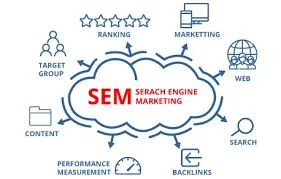
SEM is a form of online marketing that involves the promotion of websites by increasing their visibility on search engine results pages (SERPs). SEM includes both organic SEO and paid advertising, also known as pay-per-click (PPC).
Organic SEO marketing is optimizing your website to naturally rank higher in search engine results from pages without paying for ads. This can be achieved through on-page optimization, such as using the right keywords and phrases, and off-page optimization, such as building high-quality backlinks.
Paid advertising is a form of SEM that allows you to place ads on search engine results pages. These ads are typically displayed at the top or bottom of the SERPs and can be targeted to specific keywords or phrases. When someone clicks on your ad, they will be directed to your website.
SEM is an effective way to drive traffic to your website and generate leads. By optimizing your website for search engines and placing ads on SERPs using ad auctions, you can reach a larger audience and increase your chances of generating leads.
Such types of PPC marketing work on social media while running ads on social platforms.
Types of search engine marketing
Search engine marketing can be divided into two categories: organic and paid.
Organic search engine marketing is optimizing your website to naturally rank higher in Google search engine results in pages without paying for ads.
This can be achieved through on-page optimization, such as using the right keywords and phrases, and off-page optimization, such as building high-quality backlinks.
Paid search engine marketing is a form of SEM that allows you to place ads on search engine results pages. These ads are typically displayed at the top or bottom of the SERPs and can be targeted to specific keywords or phrases.
When someone clicks on your ad, they will be directed to your website.
History of search engine marketing
SEM has been around since the early days of the internet. In the 1990s, businesses began to realize the potential of the internet as a marketing tool. They started creating websites and used keyword-rich titles and descriptions to attract visitors from search engines.
As search engines became more popular, businesses began to invest more in SEM. In the early 2000s, Google launched its AdWords program, which allowed companies to place ads on Google’s search engine results pages.
This was a significant turning point for SEM, making it easier for businesses to reach their target audiences.
Today, SEM is an essential part of any effective marketing strategy online. By optimizing your website for search engines and placing ads on SERPs, you can reach a larger audience and increase your chances of generating leads.
Now, without any further ado, I will take you through the five steps that will guide you to know What Search Engine Marketing is and how it works in 5 Simple Steps. So let us directly delve into those-
5 Steps To Understand What is Search Engine Marketing
1. What Is Search Engine Marketing | Definition
According to Search Engine Land,
“Search marketing is the process of gaining traffic and visibility from search engines through both paid and unpaid efforts.”
SEM encompasses SEO Marketing & Paid Advertising in which SEO earns traffic through unpaid or free listings, while Paid Advertising is buying traffic through paid search listings.
Paid search ads help marketers get more web traffic via desktop or mobile web searches.
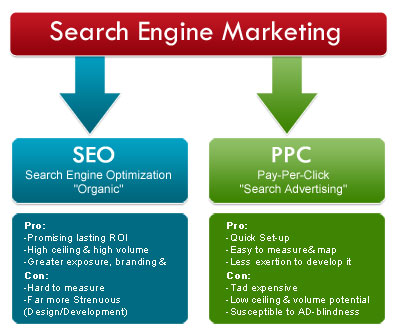
To understand Search Engine Marketing, it is important to understand both paid and unpaid means of Search Marketing. SEM is one of the best ways to use competitive cost-per-acquisition techniques to draw in new customers, improve ranking in SERPs, boost Search Engine presence, and optimize other marketing campaigns.
The primary aid of Search Engines is to deliver exactly what a searcher is looking for, and SEM assists businesses in influencing Search Engines to display their Ads to searchers.
To understand it, you should understand the below-given factors upon which SEM Marketing Depends-
- Understanding the target audience
- Setting specific goals for the Ad campaign
- Selecting the right keywords to target
- Arranging those keywords into focused campaigns and ad groups
- Creating compelling advertisements
- Guiding traffic to a landing page delivers the correct information and is optimized to convert.
2. Know The Synonyms & Acronyms Related To SEM
Next thing to know while learning Search Engine Marketing is to be clear about different synonyms and acronyms related to SEM, as this may create many perplexities for beginners.
At the beginning of Search Marketing, the term ‘SEM’ was an umbrella term for Search Engine Optimization and Paid Search Activities. Still, over time, SEM Marketing solely refers to paid search.
Below given is the list of some of the synonyms and acronyms that most ‘Search Engine Marketing Guides use to demonstrate SEM-
- Paid search ads
- Paid search advertising
- PPC (pay-per-click)
- PPC (pay-per-call)
- CPC (cost-per-click
- CPM (cost-per-thousand impressions)
3. Learn How To Get Organic & Inorganic Traffic Via Unpaid SEM
I thought to write this ‘Search Engine Marketing Guide’ to clear the confusion about the different layers incorporated under Search Marketing. We started this article by giving a glimpse of Unpaid and Paid SEM, and now the time has come to clear the air about this.
Earning traffic via unpaid or free search listings comes under Search Engine Optimization methods. The unpaid SEM, i.e., SEO, can also be further divided into two separate categories-
- Organic SEO Marketing
- Inorganic SEO Marketing
How To Get Organic Results
To get organic results by SEO, it is important to learn SEO so you can create SEO compatible website that helps you build long-lasting trust in your business.
You should know how to use White Hat SEO Tactics for SEO rank improvements. Websites optimized for search engines and focus on relevancy and SEO ranking are optimized via White Hat SEO techniques.
Some of the notable White Hat SEO practices are-
- Offering quality content and services and making your site easy to navigate
- Fast site loading times and mobile-friendliness
- Using descriptive, keyword-rich meta tags
How To Get Inorganic Results
You can get inorganic results by improving your quality score and using your bids for keywords and Ads. While organic results may take time, inorganic results highlight immediate results.
However, In-organic SEO marketing is sometimes considered Paid SEM or PPC.
Below given are some of the notable tips for inorganic SEO marketing−
- It would be best if you mined keywords properly, and then you should group them into relevant themes
- It would be best if you used the correct match types
- You should estimate bids on all match types, and they should choose the most beneficial one.
- You should continuously test your Ad Copies and work on landing page optimization.
- It would be best if you constantly strived to improve your CTR.
- You must aim for a better-quality score.
- You must target suitable locations and always look for places that seem to give your business.
- You should run a Search Query Report to filter prominent keywords.
- It would be best if you bid higher on the most searched keywords.
- You must calculate and strategize SEO methods to achieve better ROI.
4. Learn How To Earn Traffic Via Paid SEM, i.e., PPC
Learn PPC or Paid Search Engine Marketing assists you in implementing an Online Advertising System that drives online traffic to your websites, and for that, you need to pay a specific price to the publisher when your PPC ad is clicked.
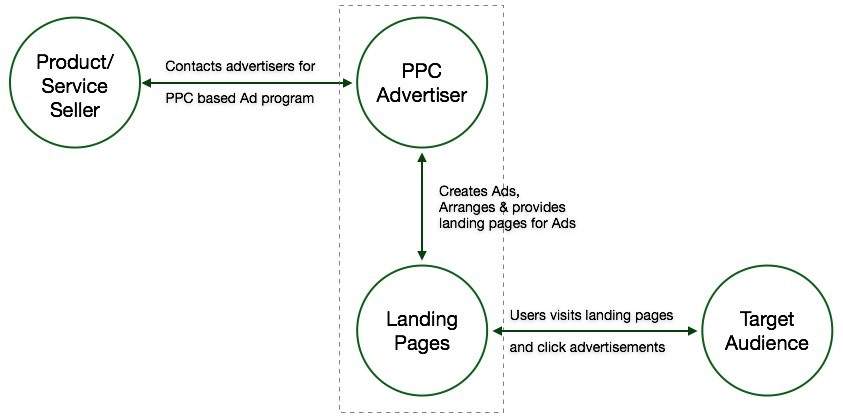
- Different entities incorporated in PPC advertising are-
- Entities incorporated in PPC Advertising
- Product Seller
- PPC Marketer
- Landing Page
- Landing Page Provider
- The viewer or the Visitor
The general formula to calculate PPC is- Pay per click ($) = Advertising cost ($) ÷ Number of ad clicks.
The success of a PPC campaign depends upon how well-written, effective, convincing, and concise your Google AdWords copy is. To run the PPC AdWords campaign, you need to follow the below-given steps-
Steps To Run AdWords PPC Campaign –
To know what Search Engine Marketing is, it is important to practice below given 4 steps-
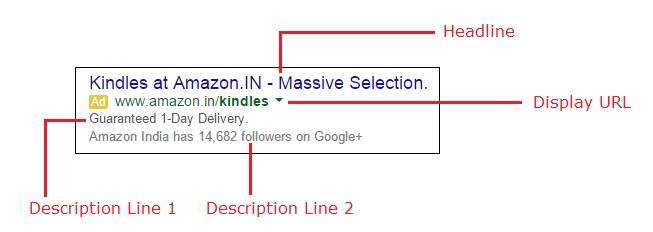
- Know the elements of PPC Ads that are important to frame any AdWords Ad. Elements of a PPC Ad are-
- Elements of a PPC Ad
- Headline
- Display URL
- Description Lines 1 and 2
- Identify your True Competitors and let your users know the seller’s Assets, USPs, and Your Credentials.
- Create a compelling CTA and write your Ad Copy
- Add Extensions, repeat keywords on landing pages, and conduct test
- Read PPC Tutorial to learn how to run the Google AdWords PPC Campaign in detail.
5. Know the Steps Involved In Search Engine Marketing
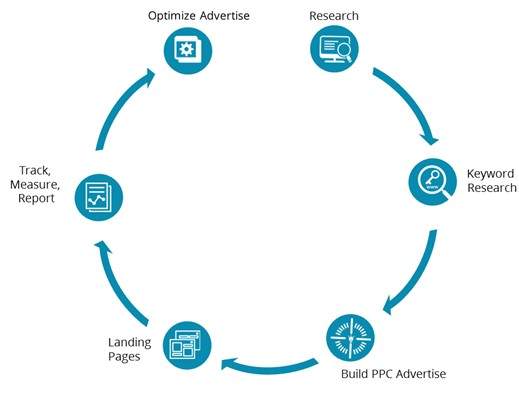
Knowing the steps involved in Paid Search Engine Marketing is the last but one of the most important points of any ‘What is Search Engine Marketing Guide’. To run an SEM campaign, below given seven steps play an important role, so let us dig into those-
(I) Define An Effective Search Marketing Strategy
- You should define your target audience and identify their needs and motivations.
- You should also know how your particular product or service could best serve their needs.
- You should review the market position of your business and identify your competitors.
- You must identify meaningful goals and benchmarks suggested by the best ‘What is Search Engine Marketing Guides’: search ranking, website traffic, sales, and other essential ROI metrics.
(II) Select the Right Keywords For Your SEM Campaign
- According to ‘What is Search Engine Marketing Guide,’ the next step is selecting the relevant keyword phrases. It would be best if you also went for the keywords that your target audiences frequently search for
- You should conduct brainstorming sessions to know the popular terms that your audiences use while searching for the kind of products and services that you offer
- You should constantly interact with your best customer, sales, and customer service teams to find out the frequently used phrases
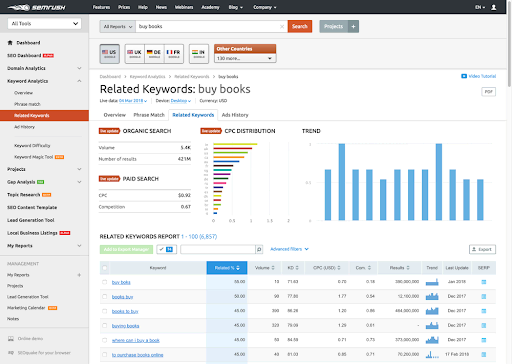
- You can also use keyword research tools for compiling a list of highly searched keyword terms.
(III) Optimize The Content Of Your Website

- Optimize Website Content
- To optimize your site content for SERPs, focusing on your site structure and making it simple and a search engine algorithm is essential.
- The vital suggestion that Search Engine Marketing Guides give about site optimization is every marketer needs to understand that search engines look for the underlying code of sites while visiting your website.
- It would be best if you always went for precise, crisp, attractive, clear, and correct content to engage your users.
- Using relevant keyword phrases in page title tags, directory names, heading tags, file names, meta tags, and alt tags is essential.
- You must pay heed to your Meta description, which is shown in the search results below your link and offers an excellent opportunity to draw in visitors to your Website.
(IV) Submit Your Site For Indexing
- Next, you should submit your site for indexing, which lets your site be visible online to the customers.
- You need to let all your site pages get indexed by search engines. To quicken the process, you can submit your site to DMOZ.org, an open directory project.
- Websites that are accepted by DMOZ get easy approval from other search engines
(V) Add Quality Links To Your Website
- According to ‘Search Engine Marketing Guides,’ this one is one of the most critical steps, and marketers have to build links to their site from valued links of other sites that their targeted visitors frequently visit.
- Having quality inbound links is directly proportional to your site’s popularity in search engine’s eyes.
- It is also important to create link-worthy site content; for this, you must create engaging and informative content.
- You should also try to get links from business partners, trade associations, vendors, and customers.
- Distributing press releases and articles online is also one of the essential Search Engine Marketing strategies suggested by ‘Search Engine Marketing Guides’
(VI) Manage Paid Search Advertise To Optimize Your SEM Practices
- As per ‘Search Engine Marketing guides, Paid Search Engine Marketing is one of the integral parts of today’s Search Marketing
- You should bid on the most relevant keywords, plus you should also make sure that your products are attractive to your potential customers
- To run a PPC campaign, you need to pay heed to the following checklist-
- Budget per Month
- Budget per Day
- Scope of Geotargeting
- List of Keywords
- A Ready Ad Copy that includes- Heading of the ad (25 char), Description Line 1 (35 char), Description Line 2 (35 char), Display URL (35 char), Destination URL (1024 char), Landing Page URL, Design of landing page ready/not ready, Image required (if any), etc.
(VII) Measure the Success Of Advertising Campaigns
- Measuring the success of your campaign is one of the most critical SEM strategies advised by ‘Search Engine Marketing Guides’
- To measure the success of your SEM campaign, you need to gauge CPC, Clicks, CPR, Impressions, Bounce rate, ROI, etc.
- It would be best if you used Web Analytics to monitor the progress and problems of Search Engine Marketing Strategies.
- You should constantly Monitor your position in SERPs and plan strategies for improving your search results.
Features of search engine marketing
Key features of SEM are-
- SEO: It is the process of optimizing a website to rank higher in search engine results pages.
- PPC is a form of SEM that allows businesses to place ads on search engine results pages.
- Targeted audience: SEM allows businesses to target a specific audience with their marketing plan.
- Increased visibility: SEM can help businesses increase their visibility in search engine results pages.
- Lead generation: SEM is an effective way to generate leads for businesses.
Search engine marketing examples
Some examples of SEM are-
- Google AdWords: Google AdWords is a popular SEM program that allows businesses to place ads on Google’s search engine results pages.
- Bing Ads: Bing Ads is an SEM program that allows businesses to place ads on Bing’s search engine results pages.
- Yahoo! Search Marketing: Yahoo! Search Marketing is an SEM program that allows businesses to place ads on Yahoo’s search engine results pages.
Search engine marketing tips
Here are some tips for SEM-
1. Research your keywords: The first step in SEM is choosing keywords or phrases you want to target. You can use a keyword research tool to find the right keywords for your campaign.
2. Optimize your website for SEO: Once you have your keywords, you need to optimize your website for SEO. This includes using the right keywords in your titles and descriptions and generating high-quality backlinks to your site.
3. Set up a PPC campaign: Once you have optimized your website, you can set up a PPC campaign to target your keywords. You will need to create ads and bid on keywords during ad auctions.
4. Monitor your results: Monitoring them is essential once you have launched your SEM campaign. This includes tracking your impressions, clicks, and conversions. You can use Google Analytics to track your SEM results.
Search engine marketing advantages and disadvantages
The advantages of search engine marketing are-
- It is an effective way to reach your target audience.
- It can help you increase your visibility on search engine results pages.
- It can help you generate leads.
Disadvantages of search engine marketing are-
- It can be expensive.
- You need to invest time and effort into research and optimization.
- Your campaign can take time to show results.
Ready To Be A Certified Search Marketer?
A forested 5 steps will help you understand what Search Engine Marketing is in the most comprehensive way possible. Still, to be a certified Search Marketer, you must go through the practical perplexities of SEM.
Search Engine Marketing Training takes you through the needed research-based internship, which incorporates Hands-on Projects and Assignments, Live Instructor-led Sessions, and Govt. of India Certified Course and provides you with Search Engine Marketing Certification.
Google and HubSpot, Inbound Search Engine Marketing certifications, are also offered.
What SEM Practices do you want to master and get Search Engine Marketing Certification via SEM Course- Update me in the comments.
FAQs
1. Search engine marketing can also be called what?
Search engine marketing strategy can also be called PPC or paid search.
2. What is the difference between SEO and SEM?
The difference between SEO and SEM is that SEO is a process of optimizing a website to rank higher in search engine results pages. At the same time, SEM is a form of marketing that allows businesses to place ads on search engine results pages.
3. What kind of businesses should use SEM?
Any business that wants to increase its visibility on search engine results pages and generate leads can use SEM. SEM can be an effective marketing strategy for small businesses to large enterprises.
4. What are the SEM certifications available?
Various SEM certifications are available from organizations such as Google, Bing, Digital Vidya, Yahoo, etc. These certifications can help you learn more about SEM and how to use it effectively for your business.
5. What is the future of SEM?
The future of SEM looks promising as more businesses are turning to SEM to increase their visibility on search engine results pages and generate leads. With the right strategy, SEM can be a powerful marketing tool for businesses of all sizes.







Simply awesome post.
Hi Shubham,
Thanks for the appreciation.
sir,your post is very nice.
I just like to read this blog and I really really got collective information about this. I will definitely apply and thanx for give this information.
I really enjoyed your blog while reading it. Thank you for sharing such valuable information.
Very nice & impressive content.Good luck guys & team.
Thank you for giving SEM information in your blog.
You’re Welcome.