To target your current and potential customers, the oldest method is Email Marketing- And hands down, it is the most useful and contemporary one as well.
We all know that we can never ignore an email, no matter how much we want to ignore it. We ought to open it so we do not see it as a notification. Even in some cases, we do not read emails but look at the brand names.
This means, anyhow emails are going to be read, the only thing you need to do is make your mail convincing enough to ensure conversions-
And this Email Marketing Tutorial will guide you to do that skillfully.
| Step | Description |
|---|---|
| Step-1 | Know your Email Marketing Goals and Build a List Accordingly |
| Step-2 | Know Different Types of Email Marketing Campaigns |
| Step-3 | Know the best Practices to Write an Email without being Blacklisted or Spammed |
| Step-4 | Know Important Email Marketing Metrics |
| Step-5 | Know Email Marketing Tools preferred by top Marketers |
Before delving deep into this Email Marketing Tutorial step by step, let us understand what contemporary Email Marketing is-
What is Email Marketing?
Email Marketing is actually the rock-solid way of promoting a business by sending emails and newsletters. When marketers wish to connect with their target audiences in a conversion-driven manner by using some personalized means, they prefer using Email Marketing.
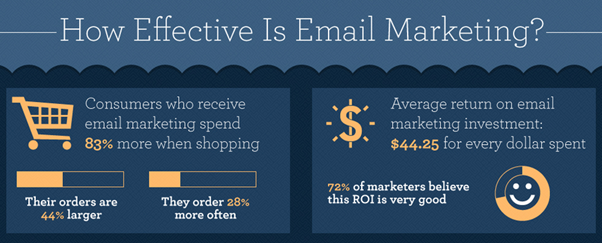
It is very powerful in establishing a connection with your prospects and ensuring revenues back to the business in the most cost-effective way possible.
According to Wikipedia-
“Email marketing is the act of sending a commercial message, typically to a group of people, using email. In its broadest sense, every email sent to a potential or current customer could be considered email marketing.”
12 Email Marketing benefits
- Different notable benefits of using Email Marketing are-
- Easy and effective Reach
- Costs lesser as compared to other marketing channels
- Higher ROI (return on investment)
- Result driven credibility
- Good Engagement
- Generation of Leads & Calls
- Interactive Communication
- Boosting Sales
- Get Started Quickly
- Less investment More Profit
- Offers a Personal Touch
- Attract New Clients
Email Marketing Statistics for 2023
According to Hubspot, here are some email marketing statistics you should know for 2023-
- There are 4 billion daily email users and is expected to increase to 4.6 billion by 2025.
- At the end of 2023, email marketing revenue is estimated to reach almost 11 billion.
- More than 306 billion emails are sent and received every day.
- 37% of brands are increasing their email budget while only just 1.3% are making cuts.
- A majority of marketers are using email leverage mobile-friendly emails as part of their marketing strategy.
- Subscriber segmentation and message personalization are the most effective email marketing strategy.
- 33% of marketers send weekly emails while 26% send emails multiple times per month.
- 77% of marketers have seen an increase in email engagement over the last year.
- Smartphone users (46%) prefer to receive brand communications via email.
- Almost half of the marketers report changing their email performance measurements as a result of Apple’s Mail Privacy Protection changes.
- Testing your emails leads to higher ROI.
Now, the below-given steps of this Email Marketing Tutorial for beginners will help you understand what is email marketing in the most comprehensive and practical way possible.
Let us explore those-
5-Step Email Marketing Tutorial
1. Know your Email Marketing Goals and Build a List Accordingly
Knowing your Email Marketing goals is the first step to running a successful Email Marketing Campaign.
As this will guide you to understand:
- the type of campaigns you should opt for,
- who your target audiences should be,
- what type of content you should include.
The best ways through which you can gauge the performance of your Email Marketing Strategy.
The most important thing about your Email Marketing goals is to let them stay aligned with the KPI and wider marketing goals of your company.
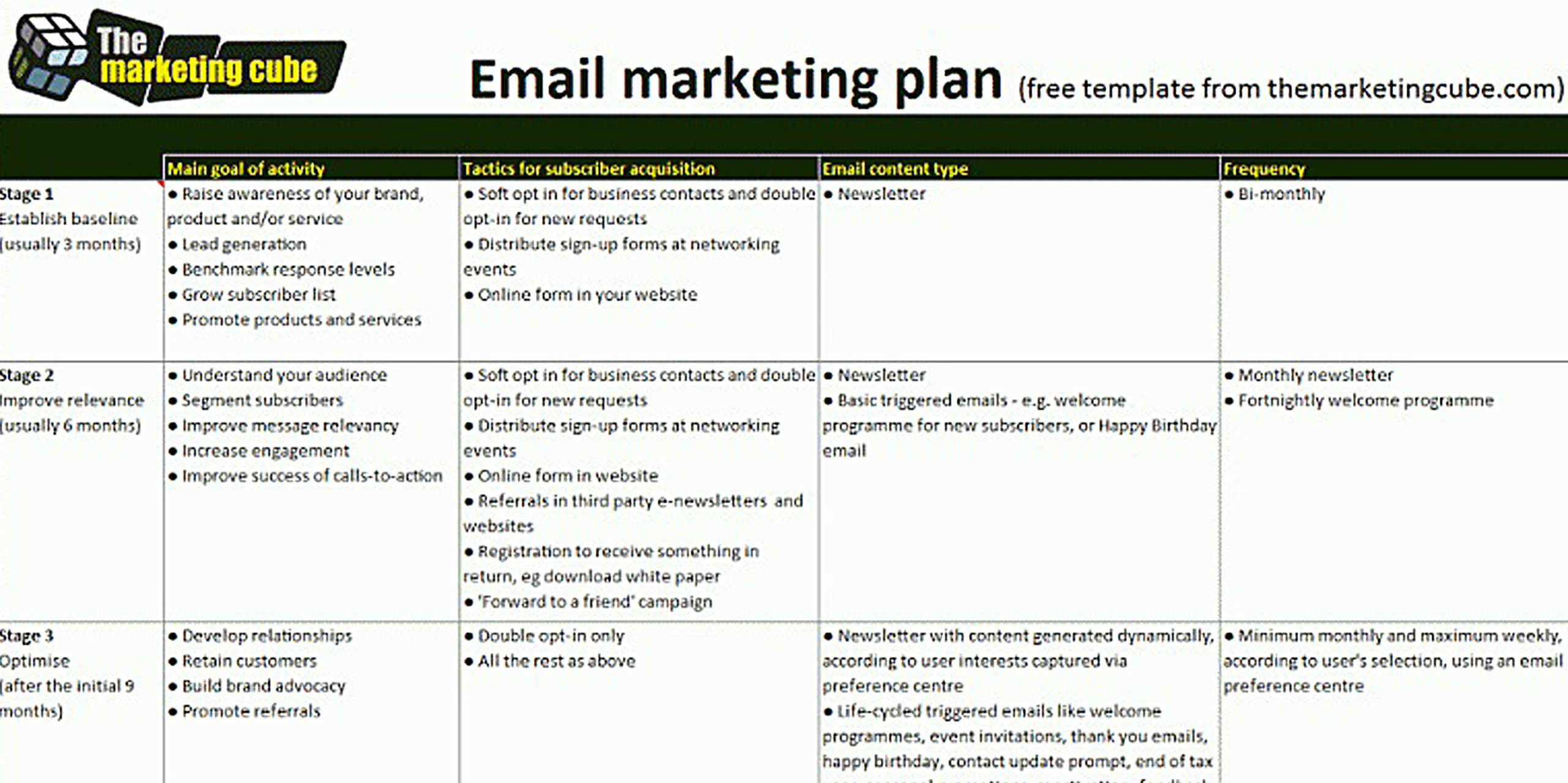
Email Marketing Plan
According to Email Marketing Tutorial, some of the possible email marketing goals are:
- Ensuring new signups for your products and services
- Targeting more attendees for an event you are planning to organize
- Generating new leads for your sales team
- Converting more donations for your cause
- Updating existing customers about new launches
If you are clear about your Email Marketing Goals and find it is well synchronized with your company’s objective, then the next thing that you need to do is build your email list, as this will help you send emails to the right audiences.
To build your email list, you can import a list of known contacts into your chosen Email Marketing Tool or you can build a new email list right from scratch.
Two important factors that your Email list should include are-
- A valuable Incentive
- Simple Subscribe Opportunities
Conversion of your Email list depends upon both of these interdependent factors.
Inter-dependency of Incentives and Subscribe Opportunities
- Only having some subscription opportunities without offering a valuable incentive will never ensure conversions for you
- Having compelling content, free offers, first-order discount, or some shipping upgrades are some Incentives that will for sure let your audiences use the subscription opportunities given by you
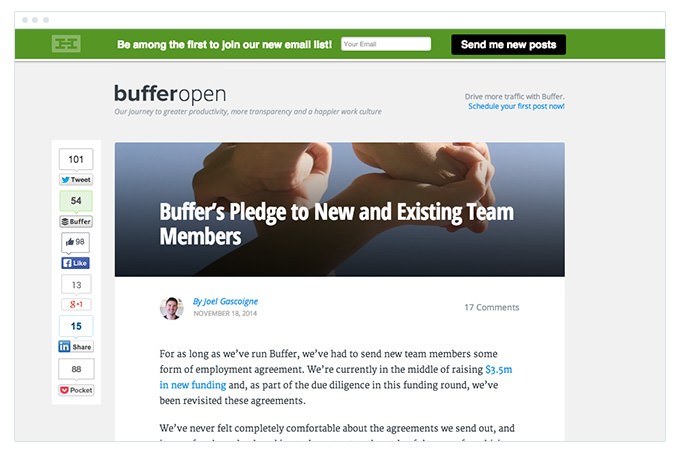
- Using Subscribe forms as header or slider are some of the Subscribe Opportunities given by you on your site. Below given “header’ is the example of a site offering subscribe opportunity-
2. Know Different Types of Email Marketing Campaigns
The next step according to Email Marketing Tutorial is, knowing different types of Email Campaigns and understanding the one that will best fit for running Email campaigns for your business.
Email Marketing Tutorial for beginners talks about four types of Email Marketing campaigns, which are based on the goals you have thought for your campaign.
Let us go through those types-
- Newsletter
- Marketing Offer
- Announcement
- Event Management
Newsletter
Newsletters are actually those email campaigns that tell target audiences about one main topic. This one would be the best fit for you if you wish to establish interaction and relationships with a list of people you already know (i.e. existing customers).
Mails send in the form of Newsletters drive people back to your site
Marketing Offer
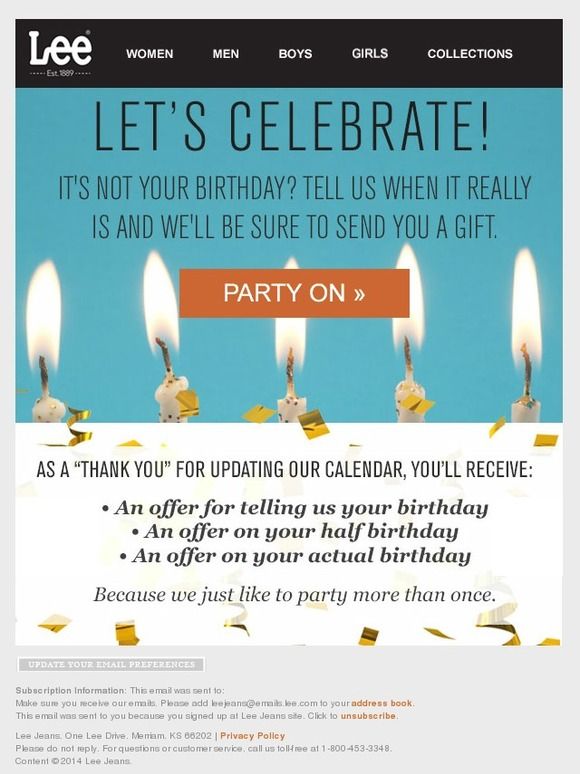
If you wish to drive direct responses then Marketing Offer is the best type of Email campaign for you.
These types of emails are used for displaying some of the latest stocks.
Marketing offer encourages people to make a purchase and in case, your Email campaign offers any discount or is involved in the promotion of your products then you should opt for this one. It has a direct CTA for targets so they can click on your site and make a purchase.
Announcement
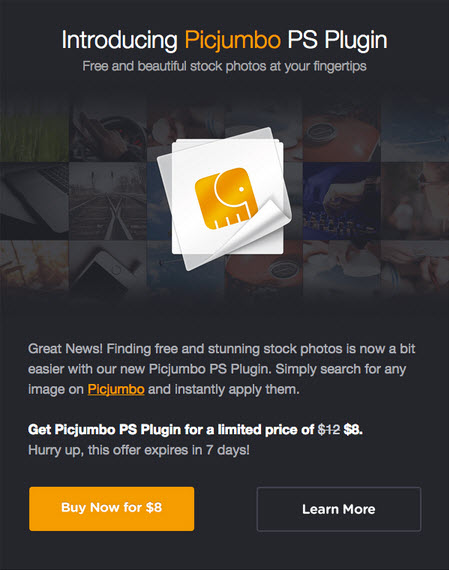
In this type of Email, marketers would send emails to subscribers for announcing any new product, service, or feature. Email Marketing Tutorial considers these emails befitting for keeping your existing customers up-to-date on your latest products and features
Event Invitation
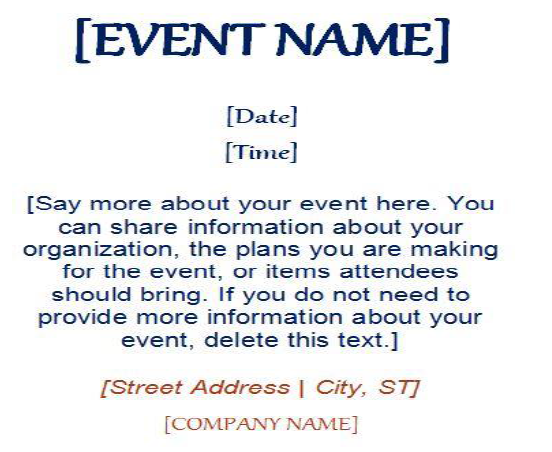
You can opt for Event Invitation emails for optimizing awareness of your event. Such types of emails are very good in encouraging your target audiences to attend and participate in the event
3. Know the Best Practices to Write an Email without being Blacklisted or Spammed
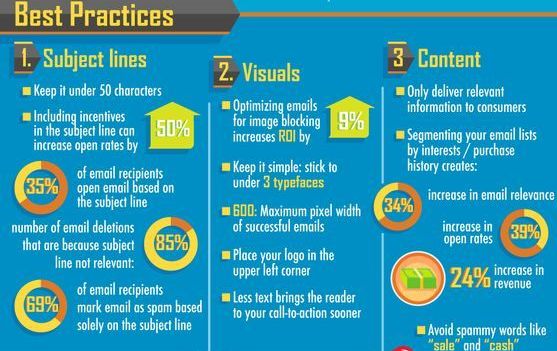
To make your email convincing enough to drive some actions from targets, you should follow below given points of the Email Marketing Tutorial-
- You should include a Valid Subject Line that should be under 50 characters and it should denote what the email is about in the most effective way possible
- You should add relevant visuals because visuals ensure better interaction and ensure great conviction. Visuals should be related to your content
- You should opt for content that does not prevaricate. It is important to be precise and to the point. Relevancy is the most important factor that ensures conversions
- The use of CTA or Call to Action is very important because it influences readers to take action toward purchasing your product or service. Your CTA should be used in a manner where it does not look promotional and your reader relates to it
- Incorporating mobile optimization in your Email campaigns is a must as more than 50% of people open emails on their Smartphones
- You should also email regularly to keep your readers in the loop and to lure them toward your products and services. Sending follow-up emails are also considered best practice suggested by Email Marketing Tutorial
Email Marketing Tutorial Suggestions to avoid being Blacklisted
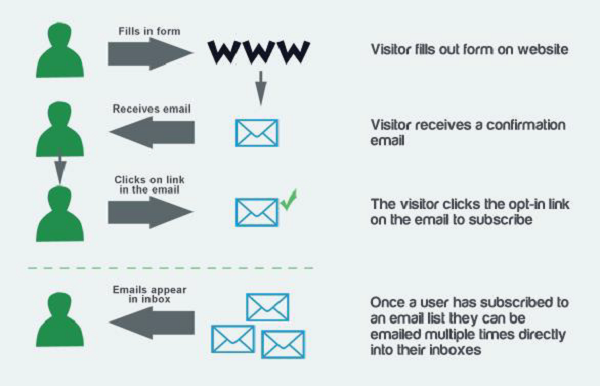
While writing an email, you should pay heed to the following practices to avoid being Blacklisted-
- Single Opt-in
- Double Opt-in
- Opt-out
- Subject Line
- Sender’s Address Content
- Accurate Send
- Don’t Bluff Spam Filters
How to avoid being Spammed
When you write an email, following the below-given tips will never let your emails be spammed-
- You should avoid using “Click here!” or “Once in a lifetime opportunity!” in your email, in addition, excessive use of exclamation points (!!!!!!!!!) and All CAPS Content should also be avoided. Email Marketing Tutorial asks marketers to avoid using bright red or green colored fonts, bad content, and HTML emails with one big image that has little or no text
- It is also advisable to not use the word “test” in the subject line of your email. Sending the same test to multiple recipients in the same company is also a wrong practice that you should avoid. Always opt out of sending inactive or stale lists, plus, using large attachments and some specific attachment types should also be not practiced
- Email Marketing Tutorial considers using a Text version of your email inevitable if you send HTML emails. Knowing the right way to use Spam checkers before sending your emails and maintaining a Google Text to Image Ratio is significant. You should make sure that your Sender ID, DKIM, SPF, and Domain Keys are aptly set up before sending your email
4. Know Important Email Marketing Metrics
Email Marketing Metrics let marketers dig deep into a high-level overview of how their subscribers and targets are interacting with their campaigns.
According to Email Marketing Tutorial, by using metrics you can easily compare the success of one campaign to another, plus, it lets you go deeper and comprehend the exact number of people who opened your Email campaign.
Web and Google Analytics Tools help you analyze the Email Marketing Metrics that are important to you. Below given are some of the key Email Marketing Metrics-
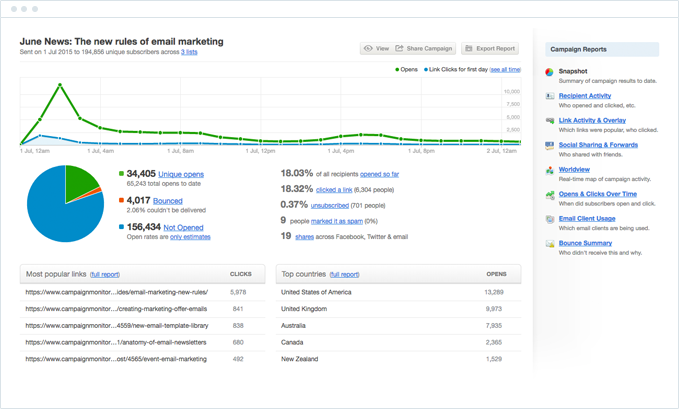
Notable Email Marketing Metrics
- The number of unique opens lets you know the number of unique subscribers who opened your Email.
- Open rate lets you know the percentage of all subscribers who opened your Email.
- The number of emails that are not opened lets you know the number of unique subscribers who never opened your Email.
- The number of bounces lets you know the number of email addresses to which your campaign could not be channelized.
- Click-Through Rate lets you know the percentage of people who opened your Email and clicked on a given link.
- The unsubscribe rate lets you know the percentage of people who unsubscribed from your email list.
- Spam complaints let you know the percentage of people or the number of people who clicked on ‘Mark as Spam’ and marked your campaign as Spam.
- Shares tell you about the people who forwarded your campaign to any of their friends. It is also quite useful for knowing about the people who shared your Email campaign via social networks.
- Response Rate tells you the percentage of people who completed the survey of your email by completing an action from the link of your email campaign.
- Forward Rate refers tells you the rate at which your subscribers share your email campaigns with others.
5. Know Email Marketing Tools preferred by top Marketers
Email Marketing Tools suggested by this Email Marketing Tutorial will help you automate your Email Marketing Campaigns. Such tools help marketers automate the channelization of Email Marketing Campaigns.
In Addition, you should opt for these tools to automate the scheduling and tracking of your Email Marketing Campaigns. Let us delve into some of the Email Marketing Tools that we find best for Email Marketers-
10 Email Marketing Tools
Here is the list of email marketing tools you can use for your email marketing campaign-
|
Email marketing tools |
Pricing |
Notable Features |
|---|---|---|
|
Free Plan: Up to 2,000 subscribers and 10,000 emails per month Paid plans: Start at $9.99 per month |
|
|
|
Free Plan: Up to unlimited subscribers and 300 emails per day Paid plans: Start at $25 per month |
|
|
|
Free Plan: Up to 500 emails per month Paid plans: Start at $16 per month |
|
|
|
Free Plan: Up to 2,500 subscribers and 15,000 emails per month Paid plans: Start at $10 per month |
|
|
|
Free Plan: 14-day free trial Paid plans: Start at $29 per month |
|
|
|
Free Plan: Up to 300 subscribers Paid plans: Start at $9 per month |
|
|
|
Free Plan: Up to 2,500 subscribers and 15.000 emails per month Paid plans: Start at $9.85 per month |
|
|
|
Free trial: It offers a 30-day free trial. Paid plans: Start at $25 per month for up to 50,000 monthly emails. |
|
|
|
Free Plan: Free email tools are limited to 2,000 sends per month, with HubSpot branding. Paid plans: HubSpot’s paid marketing plans start at $45 per month. |
|
|
|
Free Plan: Up to 2,500 subscribers and unlimited emails per month Paid plans: Start at $19 per month |
|
Your Turn Now!
The previously mentioned five steps of this Email Marketing Tutorial will for sure help you run Email Marketing Campaigns that connect, convince and convert your targets, but to perfectly master these steps, you ought to go through all of those steps in the most comprehensive and practical way possible.
You should also enroll in Email Marketing Course to practically delve into the below-given lessons-
- Ensuring of deliverability of your emails
- Tips to create effective Email Content
- Tips to acquire customers using Email Marketing
- Tips to use creatives in Email Communication
- Nurturing & Automation of Email Marketing Campaigns
To broaden your horizon in email marketing, you should also be aware of the top Email Marketing Agencies.
Want to know which type of Email Campaign would be the best fit for your audiences? – Share your Campaign details and we shall guide you.
Cheers!
FAQs
1. How do I start email marketing?
Start email marketing in these 5 steps-
- Choose an email marketing provider.
- Establish your email marketing goals.
- Build your contact list.
- Plan and execute your first campaign.
- Test and refine.
2. What are the 5 email rules?
The 5 golden rules of email are-
- Address your recipient accordingly.
- Use proper salutations and closing statements.
- Format appropriately.
- Avoid ALL CAPS in a sentence.
- Compress large files.
3. What are the 4 D’s of email management?
The 4 D’s of email management are-
- Delete it.
- Do it.
- Delegate it.
- Defer it.
4. What is the best length for a marketing email?
- There is no best length for a marketing email.
- While some email marketers think that the ideal marketing email copy length is between 50 to 125 words.
- The truth is to convert, you need a good email copy.
5. What are the 5 things you should avoid sending in an email?
A few things you should do while sending an email are-
- Forgetting attachments.
- Sending an email to the wrong recipient.
- Choosing a bad subject line.
- Using the wrong writing tone.
- Working with too many (bad) Fonts.